



Rack and Pinion Systems for Industrial Automation: Applications and Advantages in CNC Systems
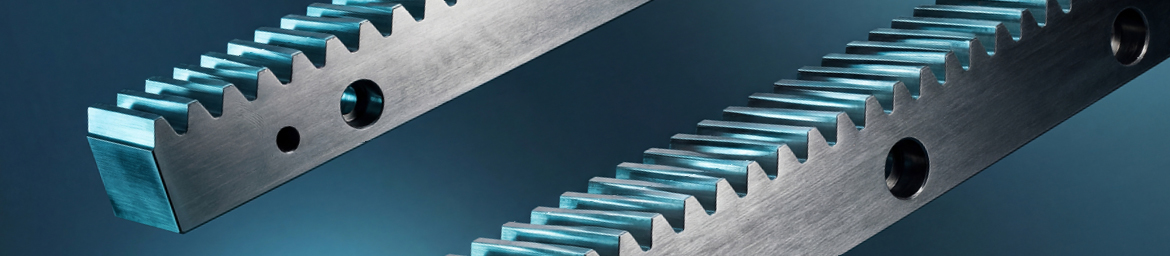
In the industrial automation sector, precision and reliability are two essential factors for ensuring productivity and operational continuity. In this context, automation rack systems represent one of the most widely used solutions for linear motion transmission in CNC machines, automated plants, and industrial handling systems.
Thanks to their mechanical design, rack systems convert the rotary motion of the pinion into precise, stable, and repeatable linear movement. For this reason, they are used in numerous industrial applications where high speeds, long operating strokes, and maximum positioning accuracy are required.
CNC Rack Systems: Why They Are Essential in Industrial Machining
CNC rack systems are used in all machinery where motion control must maintain high performance standards over time. Machining centers, laser cutting machines, CNC routers, and automated systems rely on rack-and-pinion drives to achieve accurate feed motion and stability, even during high-dynamic operations.
Compared to other linear transmission technologies, rack systems offer significant advantages, especially in large-scale industrial applications:
– high mechanical rigidity;
– positioning accuracy;
– excellent load capacity;
– reduced wear over time;
– continuous operation even under intensive working cycles.
In high-precision CNC applications, hardened and ground rack systems are often used to ensure smoother movement and reduced mechanical backlash.
Applications of Rack Systems for Automation
Automation rack systems are used across numerous industrial sectors thanks to their design versatility. The most common applications include:
– industrial automatic machines;
– linear motion systems;
– robotic systems;
– CNC gantries;
– automated assembly lines;
– laser and plasma cutting machines;
– high-precision handling systems.
In all these contexts, transmission quality directly affects machine performance and plant productivity.
Materials and Manufacturing Processes for Precision Industrial Rack Systems
The production of industrial rack systems requires highly precise machining processes and carefully selected materials based on operating conditions. Alloy steels and case-hardening steels are commonly used to ensure mechanical strength, durability, and reliability, even under heavy loads and continuous operating cycles.
Heat treatments such as induction hardening and case hardening improve the surface hardness of the teeth and increase wear resistance. In addition, final grinding ensures greater geometric accuracy, which is essential in high-performance CNC applications.
The Advantages of CNC Rack Systems in Automated Systems
Integrating precision CNC rack systems into an industrial plant means improving production efficiency and reducing maintenance-related issues. A properly designed linear transmission system makes it possible to achieve:
– greater motion precision;
– improved repeatability;
– vibration reduction;
– lower noise levels;
– longer operational life of the system.
For this reason, rack systems are now considered a strategic solution for companies operating in the industrial automation and CNC machining sectors.
Rack Systems for Automation: Long-Term Quality and Performance
The continuous evolution of industrial technologies requires increasingly reliable and high-performance components. Modern automation rack systems must guarantee high precision, wear resistance, and perfect integration with servo motors and advanced CNC systems.
Choosing high-quality rack systems means improving the performance of the entire plant, reducing machine downtime, and increasing long-term productivity. For this reason, in the design of industrial automated systems, linear transmission plays a key role in achieving reliability, precision, and operational continuity.
FAQ
How do you determine the module of a gear?
The module is obtained by dividing the pitch diameter by the number of teeth. It is a basic parameter but must be included in a broader calculation.
How do you calculate a gear?
Gear calculation includes geometry, transmission ratio, and strength verification. It is not just a formula, but a complete design process.
How is the module of a gear calculated?
It is defined based on loads and operating conditions, with the goal of ensuring durability and reliability.
Which parameters are needed to design a gear?
Module, number of teeth, pressure angle, helix angle, face width, material, and heat treatments.
What is the best material for gears?
It depends on the application. Case-hardening steels are among the most widely used in high-precision gear production due to their strength and durability.
When should custom gears be chosen?
When it is necessary to optimize performance, durability, and long-term costs, avoiding the limitations of standard solutions.
Precision gear manufacturing represents a key driver of efficiency and margin improvement. Optimizing material, weight, and machining, while extending service life, has a direct impact on overall product cost.
In modern gear production, design excellence is no longer optional; it is what separates those who compete on price from those who compete on quality.
Discover our products to get to know their quality first hand: gambinimeccanica.com/products/